The Attention Economy Goes Global: How Breaking News Has Become a Business Battleground


When a central bank unexpectedly holds interest rates, the news reaches trading desks within milliseconds — and retail investors’ smartphones within seconds. The gap between those two moments, once measured in hours or days, has collapsed so completely that the distinction between “financial media” and “financial infrastructure” is becoming genuinely hard to draw. The business of breaking news, long assumed to be in terminal decline, has discovered a second act — and it looks nothing like the first.
Speed as a Product, Not Just a Feature
The traditional newspaper model treated speed as a competitive advantage within a relatively slow system. An afternoon edition beat a morning rival by hours. Digital publishing collapsed that to minutes, then seconds, and now the arms race has moved somewhere more uncomfortable: the tension between being first and being right. High-profile errors — election calls reversed, market-moving corporate announcements misread — have reminded audiences and advertisers alike that velocity without verification carries real costs.
Yet the demand for immediacy hasn’t softened. If anything, the appetite has grown more specific. Readers increasingly want speed calibrated to their domain: a political analyst wants real-time legislative developments, a fund manager wants earnings revisions, a logistics director wants port disruption alerts. General-purpose news organisations have responded by segmenting their output in ways that would have seemed extravagant a decade ago, building vertical channels, push-notification tiers, and API-fed data products alongside their traditional editorial operations.
The Blurring Line Between News and Market Intelligence
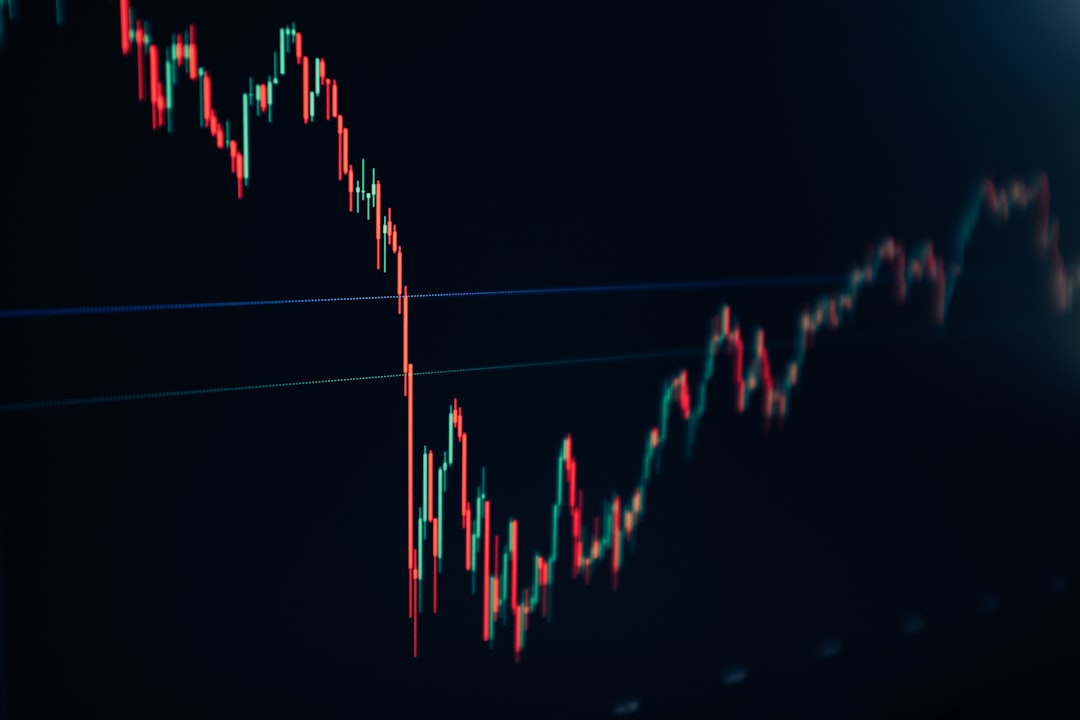
Nowhere is this convergence more visible than in financial coverage. News about geopolitical instability, central bank language, or supply-chain disruption has always moved markets, but the feedback loop is now so tight that the line between journalism and market intelligence has effectively dissolved. Platforms aggregating trading updates for investors alongside conventional headlines reflect a broader structural shift: readers want context and consequence bundled together, not delivered in separate tabs.
This shift has driven a wave of product experimentation. Subscription-based briefings, machine-readable news feeds sold directly to algorithmic trading firms, and audio summaries optimised for commuters are all attempts to monetise the same underlying asset — verified, timely information — through radically different channels. The economics vary sharply. A single institutional data licence can generate more revenue than tens of thousands of individual digital subscriptions, which explains why major publishers have quietly built B2B arms that dwarf their consumer-facing operations.
Trust as the Scarce Resource
What money cannot easily replicate, however, is credibility. As the number of news-adjacent content producers has exploded — newsletters, podcasts, social feeds, AI-generated summaries — audiences have grown more sophisticated about provenance. Surveys consistently find that, despite declining trust in media as an institution, individuals still place disproportionate confidence in specific outlets they consider reliable. That granularity matters commercially: a trusted brand can charge a premium for the same information that a less-established source gives away for free.
This dynamic has intensified editorial investment in accountability journalism even at outlets that simultaneously chase digital scale. The calculation is counterintuitive but defensible: expensive investigative work anchors the credibility that makes everything else — the newsletters, the podcasts, the data products — worth paying for. Brand architecture, in other words, has become a core editorial strategy rather than a marketing afterthought.
Artificial Intelligence: Accelerant, Not Replacement
The introduction of large language models into newsroom workflows has intensified every one of these pressures. Automated tools are now capable of drafting routine earnings summaries, sports results, and weather alerts faster than any human team, freeing reporters for more interpretive work — in theory. In practice, the transition is messier. Questions around accuracy, copyright, and the sourcing of training data remain unresolved, and several high-profile AI-generated errors have reinforced the argument that human editorial judgment is not merely a legacy cost but a genuine product differentiator.
What AI has unambiguously changed is the economics of content distribution. The marginal cost of producing a localised or personalised version of a story has fallen close to zero, enabling publishers to reach niche audiences that would previously have been commercially unviable. A news product tailored to, say, Southeast Asian commodity markets or European energy-sector regulation is now feasible at a fraction of its former cost — and the addressable audience, it turns out, is more willing to pay for relevance than for volume.
What Comes Next
The structural transformation of the news industry is not a story with a tidy resolution on the horizon. The pressures — technological, commercial, political — are compounding rather than resolving. What is becoming clearer, though, is that the organisations most likely to endure are those that have stopped treating journalism and business strategy as separate conversations. The news organisations that will matter in ten years are probably already making editorial decisions — about speed, depth, format, and audience — that are simultaneously product decisions. That the two vocabularies have merged so completely is, depending on your perspective, either deeply concerning or long overdue. Either way, it is the reality in which everyone operating in this space now works.