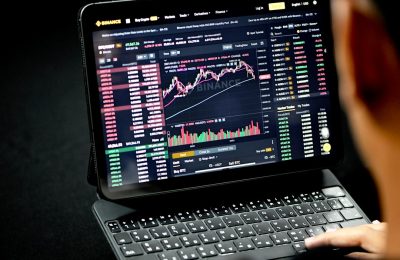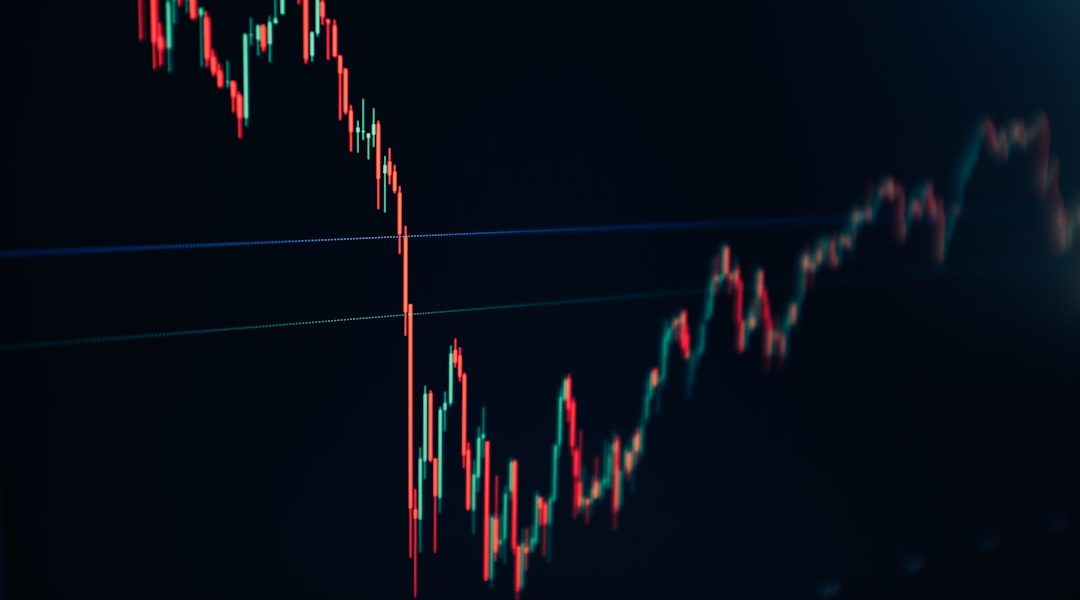
When the Swiss National Bank stunned markets by abandoning its currency cap in January 2015, traders who were monitoring live news feeds had a window of seconds — sometimes less — to react before the franc surged nearly 30 percent against the euro. That single episode crystallised what institutional investors had long understood and retail participants were only beginning to grasp: in modern markets, the quality and speed of your information flow is not a peripheral advantage. It is the advantage.
The Convergence of News and Market Intelligence
For most of the twentieth century, a comfortable firewall existed between financial analysis and general journalism. Analysts produced research; reporters covered events. The two disciplines informed each other, but they operated on separate timelines and served distinct audiences. That boundary has collapsed, and the collapse has accelerated sharply since the mid-2010s as algorithmic trading systems began harvesting headlines in real time, translating sentiment signals directly into order flow.
The practical consequence is that macroeconomic journalism — central bank statements, geopolitical developments, supply chain disruptions — now moves asset prices in ways that once required a formal earnings release or a regulatory filing to trigger. A well-sourced report on OPEC production talks can shift crude futures within minutes. A single word change in a Federal Reserve press conference transcript, detected by natural-language processing tools, can reprice bond markets before a human analyst has finished reading the paragraph.
For individual investors, navigating this environment without institutional-grade information resources has become genuinely difficult. Aggregated platforms that synthesise breaking political and economic developments help close that gap, and resources offering trading updates for investors represent part of a broader ecosystem that has emerged to serve readers who need context alongside raw headlines.
Why Context Has Become as Valuable as Speed
Speed matters, but it has a ceiling determined by latency and infrastructure that retail participants will never realistically match. What they can compete on is interpretation — understanding why a piece of news matters, not merely that it happened. This is where quality editorial journalism retains its edge over raw data feeds.
Consider how coverage of central bank policy divergence plays out. When the European Central Bank and the Federal Reserve move in opposite directions on interest rates, the downstream effects ripple through currency pairs, emerging market debt, commodity pricing, and equity sector rotations simultaneously. A headline stating “ECB holds rates” is technically accurate but analytically thin. The investor who understands the dissenting votes within the governing council, the inflation trajectory driving the decision, and the historical pattern of what follows such pauses is operating with a fundamentally different information set — even if they read the news thirty seconds later than someone with a Bloomberg terminal.
This demand for analytical depth has pushed general-interest news organisations to develop increasingly sophisticated financial and business coverage. The old model of a separate “markets” section, updated once daily, has given way to continuous commentary that integrates geopolitical risk, policy analysis, and sector-specific reporting into a unified editorial voice.
The Retail Investor’s Shifting Information Diet
Retail participation in equity and derivatives markets expanded dramatically during the pandemic years and has not fully retreated. Brokerage platforms that once catered primarily to professionals now serve tens of millions of self-directed investors whose information habits differ markedly from those of the previous generation of private shareholders.
These investors are more likely to read across multiple sources simultaneously, more likely to cross-reference news against social sentiment indicators, and more sceptical of single-source narratives. They have also grown more sensitive to the distinction between reporting and commentary — a distinction that became acutely important during periods of heightened market volatility, when opinion dressed as fact could trigger disproportionate trading behaviour.
The response from serious news organisations has been a renewed emphasis on editorial transparency: being explicit about what is confirmed, what is sourced anonymously, and what represents analysis rather than established fact. For markets, this discipline is not merely a journalistic virtue — it is a practical risk management tool for readers making capital allocation decisions based on what they read.
Geopolitical Risk and the New Relevance of Foreign Correspondence
One underappreciated consequence of this information environment is the financial rehabilitation of foreign correspondence. Budget pressures had hollowed out international reporting desks throughout the 2000s and early 2010s, yet the events of recent years — from supply chain fractures linked to regional conflicts to sanctions regimes reshaping commodity flows — have demonstrated that granular, on-the-ground reporting from distant markets carries direct monetary value. Investors who understood the operational geography of the Black Sea grain corridor, or the regulatory architecture of Chinese technology oversight, were better positioned than those relying solely on domestic financial media.
The Swiss franc episode of 2015 feels almost quaint now, a simpler demonstration of a principle that has since grown far more complex. Today’s investor faces a continuous, multinational information stream in which the line between a political dispatch and a market-moving data point has essentially disappeared. Those who treat news as mere background noise, rather than as primary analytical material, do so at measurable cost.